A time of change at Merri Creek Management Committee
As Merri Creek Management Committee approaches its 35th year of operation, we celebrate both the enduring culture of our organisation
as well as anticipating a time of growth and change. In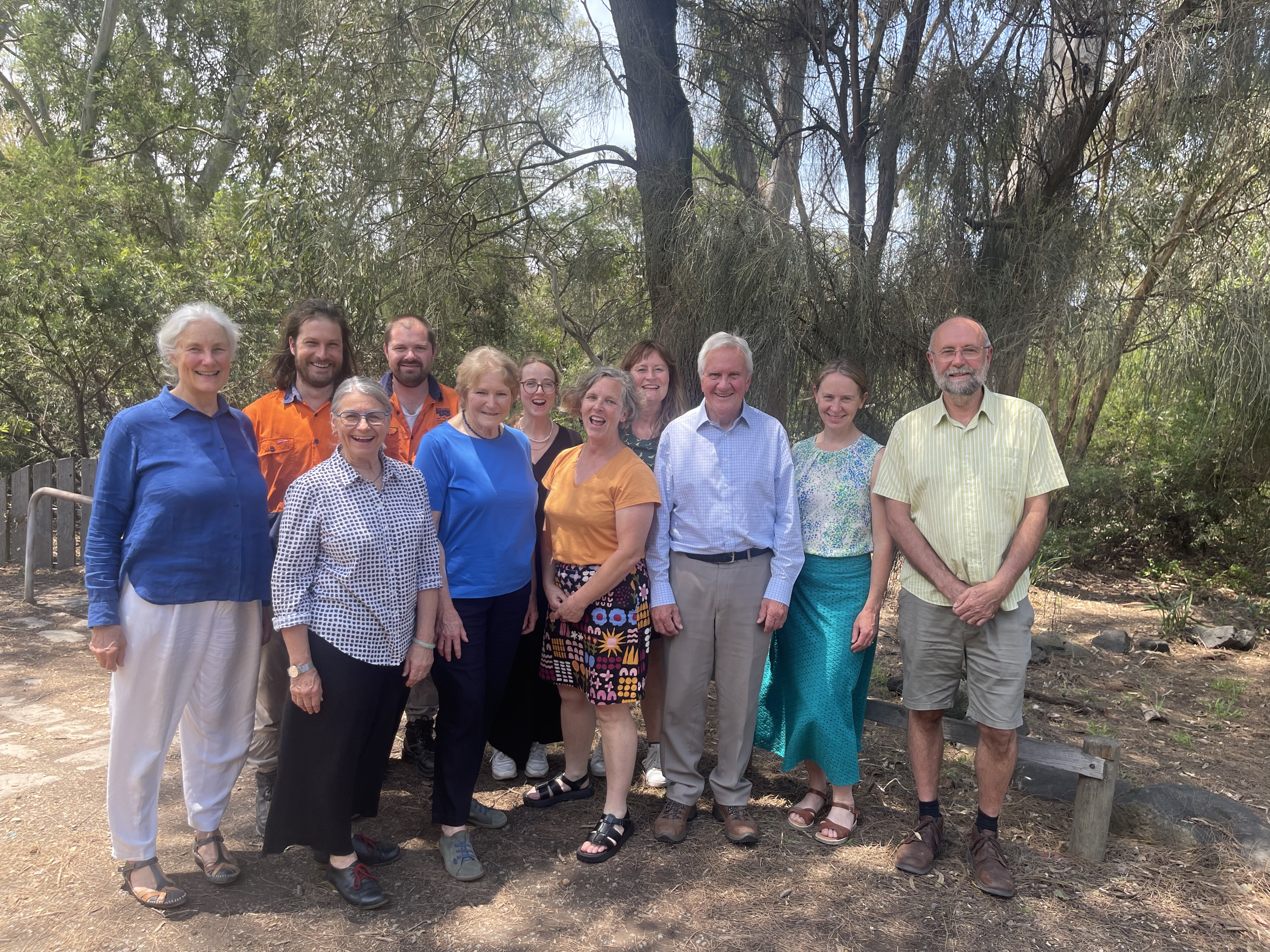 2023 we farewelled team members who have supported the Merri Creek with passion for many years, including Ray Radford, who served the organisation for 28 years and who remains involved as a volunteer with Friends of Merri Creek.
Ray is known for stewarding the Merri News and Annual Reports, his hands-on work organising many Woody Weed Whacking events, his tenacious pursuit of the usage of Woi-wurrung names for Merri grasslands and his overall versatility to help the organisation with whatever it has needed.
International Women’s Day
On 8th March we celebrate' the contribution of women on International Womens Day. Across our beautiful city are the stories of women making a difference to the green spaces where Melburnians connect with nature. Today, on International Women’s Day, we recognise and celebrate the contribution of women and female-identifying changemakers to the restoration of these spaces, both in the broader urban conservation community and along the banks of our much-loved Merri Creek.
 Women play a critical role in the protection and restoration of green spaces across Australia, a truth that is understood by our friends at the annual Women in Conservation breakfast and Women’s Environmental Leadership Australia (WELA). Women bring a unique perspective at every level of conservation, whether through the keen eyes of a scientist, the engaging voice of an environmental educator or the leadership of a philanthropist who supports this work. The social impact of biodiversity and habitat loss are felt by women just as they are by others, which is why it’s essential that women and female-identifying people contribute equally in the solution to those problems.
Merri community celebrates 50 years at Ribbon of Nature book launch
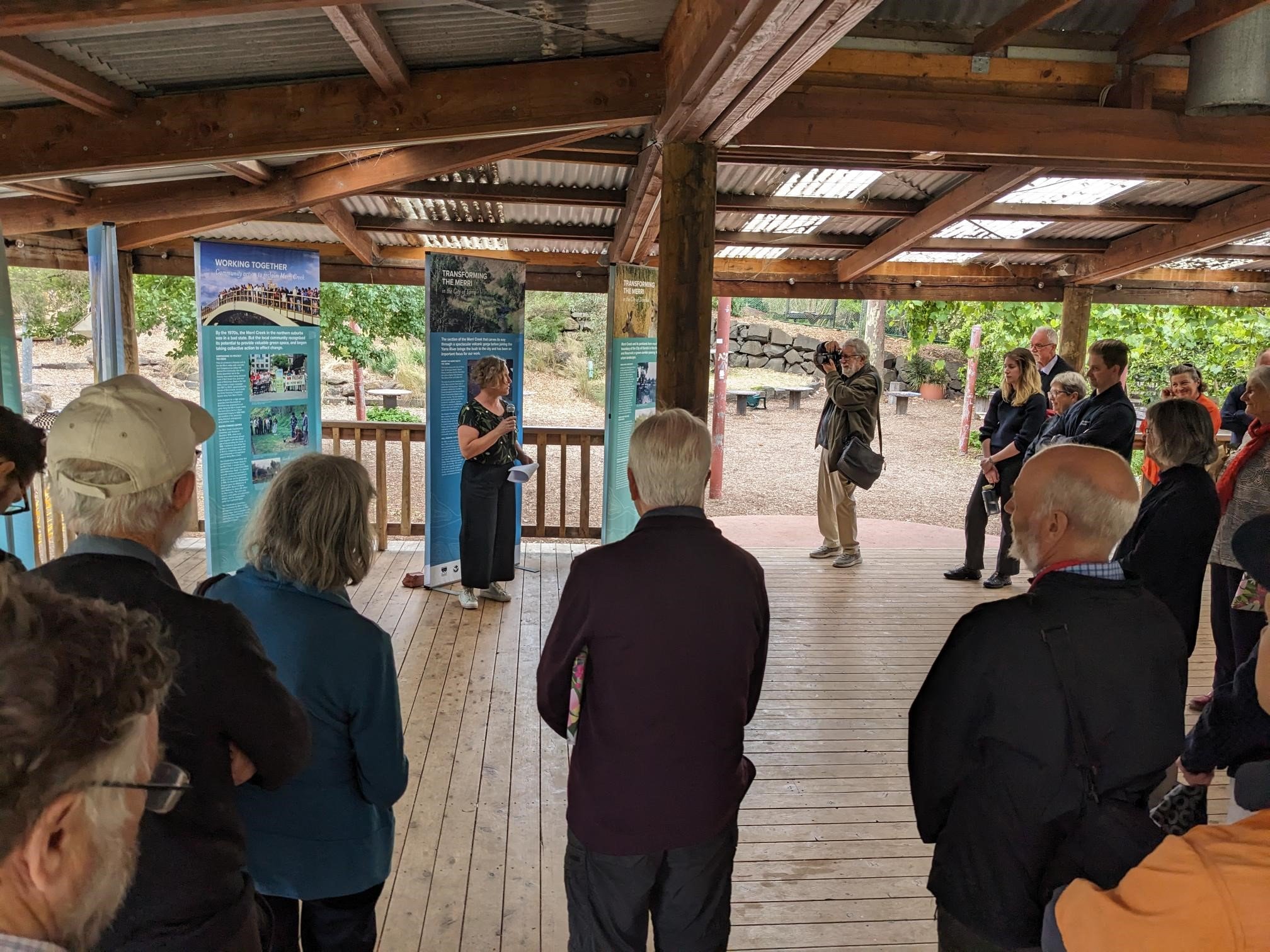
In November last year, friends, neighbours, volunteers, activists, writers, photographers and scientists, bound by a shared love of the Merri Creek, came together to celebrate an incredible story of restoration and transformation – a story told within the pages of Merri Creek: A Ribbon of Nature in Melbourne’s North. The book is artfully designed and beautifully written to reminisce on a half-century of achievement for our much-loved creek. A Ribbon of Nature first came to life as the vision of the four directors of the Merri Creek Environment Fund (which funds some of the work carried out by Merri Creek Management Committee) stewarded by Ann Sanson, but soon became a passion project for many people revelling in the telling of this inspiring story.
“Ribbon of Nature” - New Merri Creek Book Out Now
 This beautiful full colour book, Merri Creek: a ribbon of nature in Melbourne’s North, celebrates 50 years of community efforts to protect and restore one of Melbourne’s most popular waterways. Contributions from more than 20 photographers demonstrate the vibrant flora, fauna, and history of the creek.
Based on a series of banners developed for Merri Creek Management Committee in 2015, the book highlights the outstanding community achievement since 1975 in transforming the Merri Creek from a weed-smothered drain to a much-loved waterway running through a bushland corridor.
$65 from the Friends of Merri Creek on-line shop
“For thousands of years, the Creek and surrounding lands were a source of food and culture which sustained the traditional custodians, the Wurundjeri Woi-wurrung people. But by 1970 the Merri was in crisis. Heavily polluted, with much of the native vegetation and wildlife gone, it had become a drain and a dumping ground. Over the past few decades, the story of the Merri has been one of transformation. […] Today, the Merri Creek is flourishing again, but there are many challenges ahead and there is still much work to be done. We invite you to join in this community effort.”
Why our Eucalypts look unhealthy
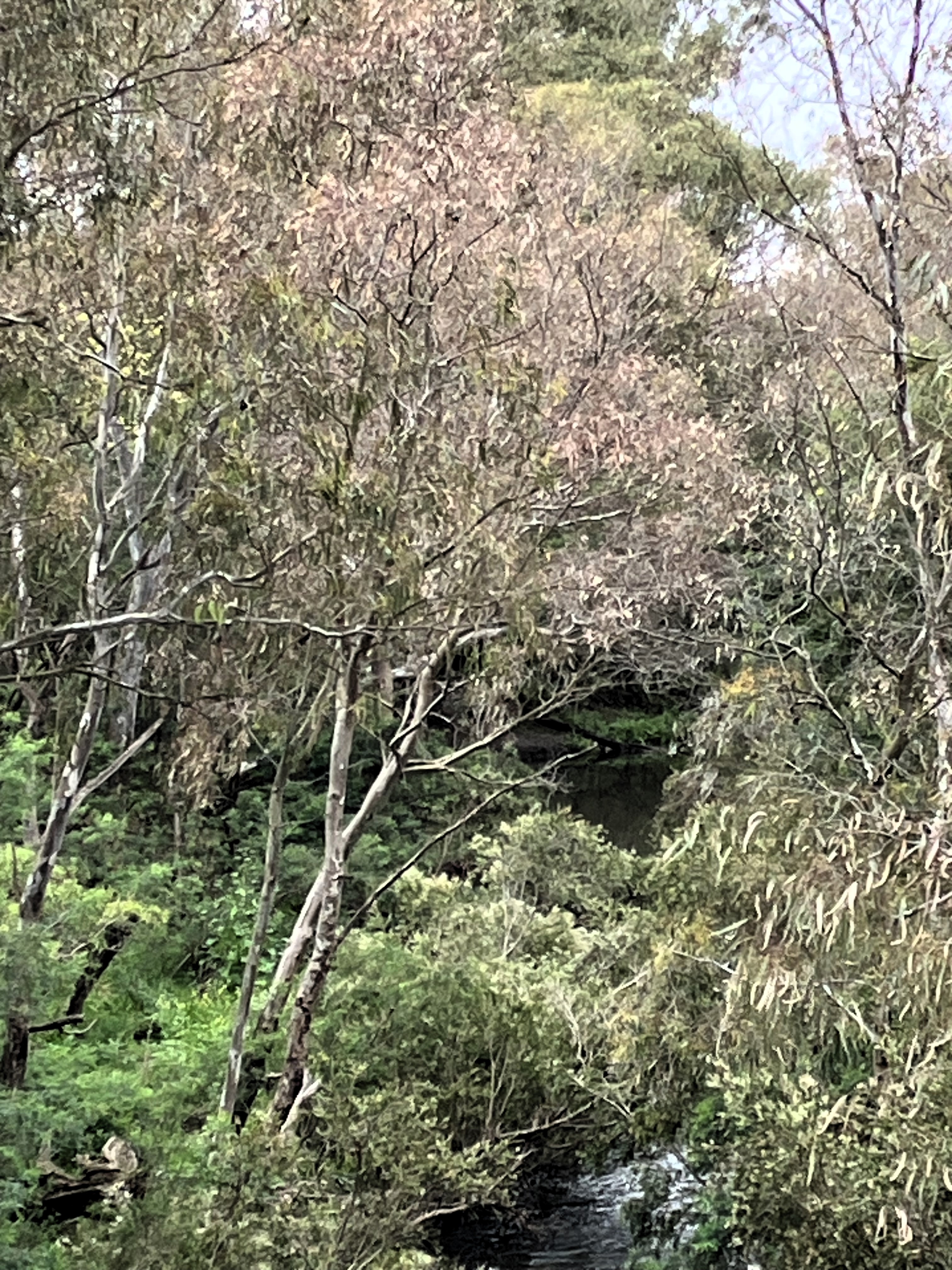 The apparent decline of eucalypts along Merri Creek is caused by a boom in psyllids - an insect that feeds on sap and secretes a sugary 'lerp'. These insects occur naturally and cause these sort of effects from time to time - one of the natural cycles that thin out the mass thickets of young eucalypt saplings and allow a smaller number of gum trees to mature and dominate. This issue extends throughout greater Melbourne to north of the Great Divide, but along the Merri, it tends to mostly affect River Red Gums, leaving other gums, like yellow gums and manna gums, much less affected.
However, the scale on which it is now occurring is highly unusual. Around Melbourne, this boom may be partly caused by more favourable conditions, such as flowering plants in our gardens providing a reliable source of nectar for larger, more aggressive, nectar-eating birds, such as Noisy Miners and Rainbow Lorikeets. These large birds are displacing some of the smaller insect-eating birds such as Pardalotes, which would feed on the psyllids. Other factors, such as warmer weather, unseasonal rain, other effects of climate change, and changes in hydrology from urban development, may also cause further stress on the gums.
Learning in school indigenous gardens
 Merri Creek catchment’s schools are excellent places for indigenous gardens and offer an array of learning opportunities. MCMC’s Learning Grounds Program is not a ‘one size fits all’ approach. We’ve worked with school communities for over 20 years with over fifty school-based indigenous garden projects in the Merri Creek catchment who need one-on-one specialist support. Indigenous gardens in schools are all individual yet share common potential curriculum links such as history, geography, performance, art, and science. We tailor and maximise age-appropriate student learning including briefings about the difference between introduced, native and indigenous species and cultural contexts such as NAIDOC Week.
 Inspiring indigenous gardens on school grounds include:
• Carlton Primary School connects with their curriculum goals to notice Wurundjeri seasons through changes in their indigenous garden.
• Marymede Catholic College co-created their indigenous garden as an outdoor learning centre to promote and contextualise learning on Wurundjeri Country.
• Thornbury Primary School connected with NAIDOC Week and replaced introduced species with indigenous plants.
• Edgars Creek Primary School made their connection to Country come to life in 2022 with a series of student incursions culminating in planting a new indigenous garden.  • Spensley Street Primary School acknowledge Wurundjeri Country with their indigenous gardens and show respect for the very nearby biodiversity conservation efforts at Hall Reserve.
Local research shows multiple advantages of indigenous gardens at school and benefits such as cooling school grounds and enhancing student cognitive development.
Please contact to discuss in-school support such as co-planning an indigenous garden (site, plant list, preparation and maintenance), co-planting an indigenous garden, co-managing your indigenous garden, and how to develop and extend learning opportunities while delivering the curriculum with an indigenous garden.
More Articles …
Page 12 of 13