
For most Melburnians, the view from a Metro train window rushes past in a blur – an unremarkable stretch of grass, perhaps a small patch of scrub. Few realise that these seemingly ordinary rail corridors are home to some of Victoria’s most threatened grassland species and ecological communities.
Since 2018, MCMC has played a central role in helping Metro Trains protect and restore these vitally important ‘biosites’. When the current Metro franchise began, there were 30 sites identified as having significant ecological values, many of them neglected or poorly documented. Metro engaged specialist contractors to restore and monitor the sites, with MCMC taking responsibility for the majority – particularly the most sensitive or complex grassland reserves.

The results have been striking.
Mid-franchise monitoring showed a 314% increase in the abundance of threatened species across the network, the recovery of three nationally threatened ecological communities, and the presence of 5 threatened species never before recorded in the rail reserve system.
Much of this success can be traced directly to MCMC’s on-the-ground work, which includes ecological burning, careful hand-weeding around threatened plants, surveys and monitoring.
“MCMC manage 20 of the original 30 sites for us, and we really appreciate their expertise, especially when it comes to native grasslands,” says Ben Roberts, Biodiversity Manager for Metro Trains. “As the only ecologist working within Metro, I also rely on Michael Longmore as a sounding board for ideas or concerns that I have.”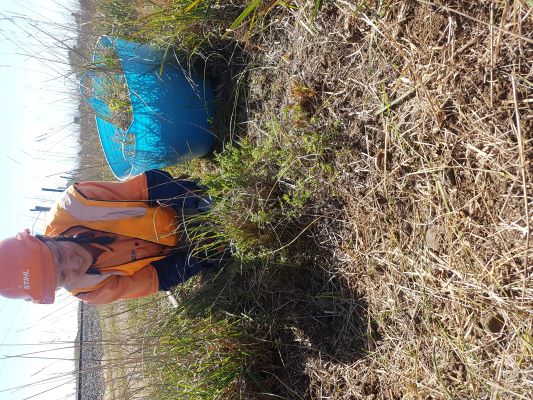
Over time, the partnership between the two organisations has grown in both scope and strength. Today, Metro manages more than 50 biosites, with MCMC continuing to deliver the lion’s share. The collaboration has also expanded into new restoration trials. Along the Sunbury Line, MCMC has been working with Metro and the University of Melbourne to test direct seeding techniques for grassland restoration – methods never before attempted in an active rail corridor. Maintenance and monitoring are now taking place, with the trial showing promising early results.
For MCMC, involvement with Metro Trains biosite program represents far more than just fee-for-service income. According to Michael Longmore, MCMC’s Ecological Restoration Program Manager, it has been a powerful driver of organisational strengthening, broadening the skills of the ecological restoration team.
“Through the Metro program, the team have been exposed to techniques they may not have previously used, like direct seeding,” he says. “They’ve also gained opportunities to survey for threatened species like striped legless lizards. We’ve since been able to apply those skills back in the Merri Creek catchment for the benefit of our member councils.”
What seems to commuters like a simple strip of grass is in fact a place where threatened ecosystems are recovering, new restoration methods are tested, and MCMC’s team is gaining expertise that will serve the community for years to come.
This story first appeared in the 2024-2025 Annual Report – click here to view the full report.




 Merri Creek Management Committee. 2 Lee St, East Brunswick, Victoria, Australia 3057