
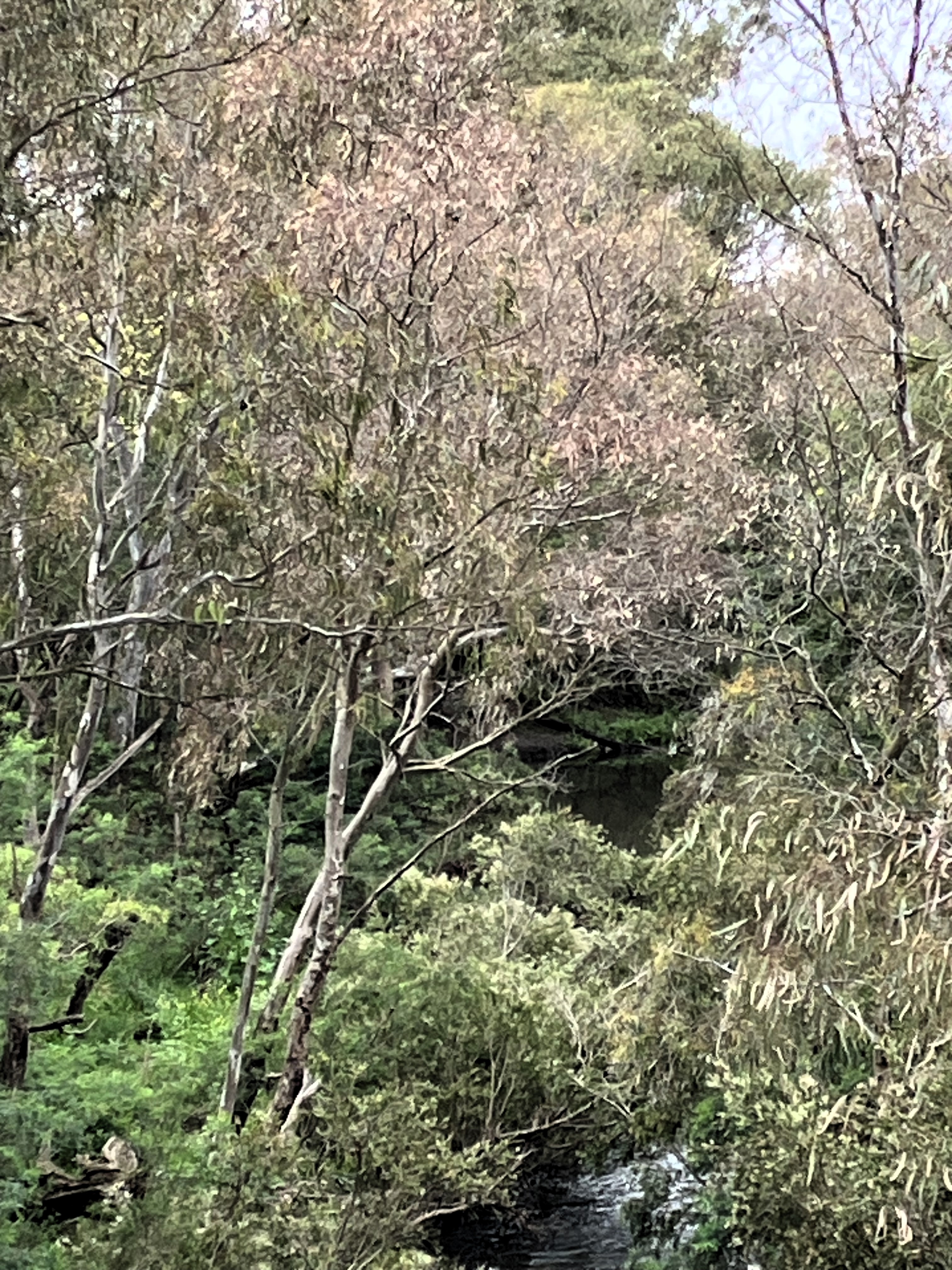
 The apparent decline of eucalypts along Merri Creek is caused by a boom in psyllids - an insect that feeds on sap and secretes a sugary 'lerp'. These insects occur naturally and cause these sort of effects from time to time - one of the natural cycles that thin out the mass thickets of young eucalypt saplings and allow a smaller number of gum trees to mature and dominate. This issue extends throughout greater Melbourne to north of the Great Divide, but along the Merri, it tends to mostly affect River Red Gums, leaving other gums, like yellow gums and manna gums, much less affected.
However, the scale on which it is now occurring is highly unusual. Around Melbourne, this boom may be partly caused by more favourable conditions, such as flowering plants in our gardens providing a reliable source of nectar for larger, more aggressive, nectar-eating birds, such as Noisy Miners and Rainbow Lorikeets. These large birds are displacing some of the smaller insect-eating birds such as Pardalotes, which would feed on the psyllids. Other factors, such as warmer weather, unseasonal rain, other effects of climate change, and changes in hydrology from urban development, may also cause further stress on the gums.
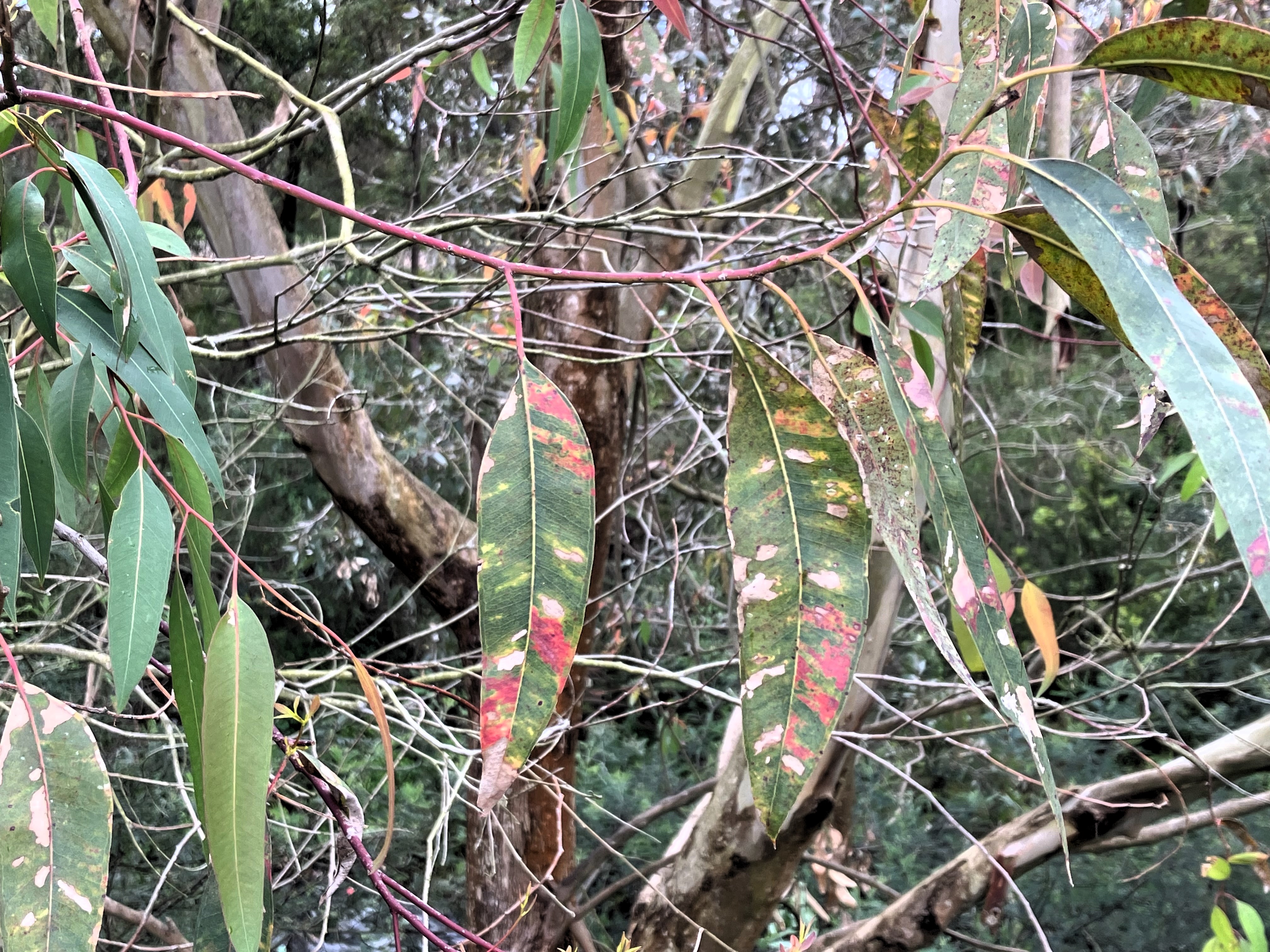 There is not a lot that we can do about this on a local level, but one thing we can do is to plant lots of dense, prickly locally indigenous shrubs to provide refuge to the small woodland birds which feed on the insects. We can also try to ensure that cats are kept inside. It's also possible that psyllid numbers will crash of their own accord as the seasons continue to shift, or as bird interactions continue to change, and that most of the gums should recover from their current distress.
Some recommended species to encourage small birds:
* Acacia paradoxa Hedge Wattle (2m high – very thorny so don’t plant near paths)
* Melicytus dentatus Tree Violet (2-3m high)
* Bursaria spinosa Sweet Bursaria (4-6m high)
And, even though it’s not prickly, Rock Correa provides good habitat:
* Correa glabra Rock Correa (1-2m high)
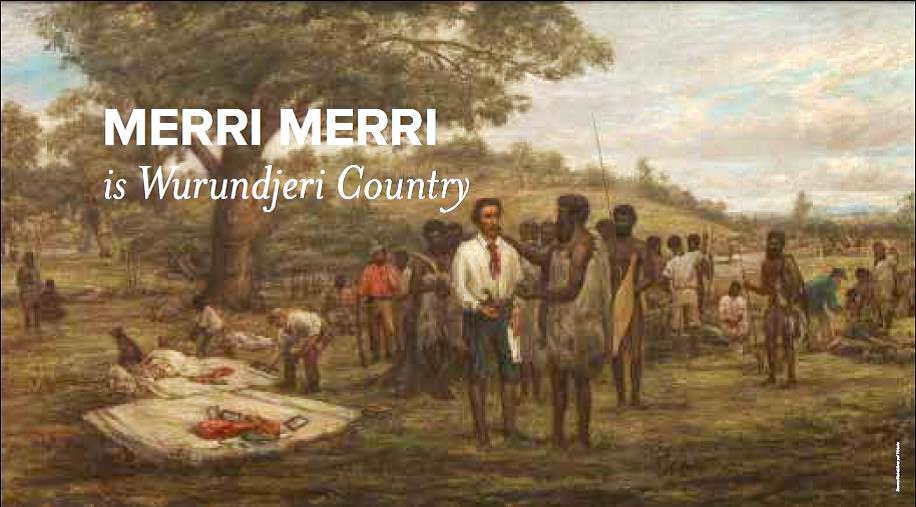 See a web version of these fabulous panels which celebrate the outstanding community achievement since 1975 in transforming Merri Creek from a weed-smothered drain to a much-loved waterway running through a bushland corridor:



 Merri Creek Management Committee. 2 Lee St, East Brunswick, Victoria, Australia 3057